Loading...
Serving Hartford, CT and surrounding areas. (959) 333-3893
Upgrade your patio, driveway, or pool deck with a decorative surface built to survive Hartford winters and look good for decades.
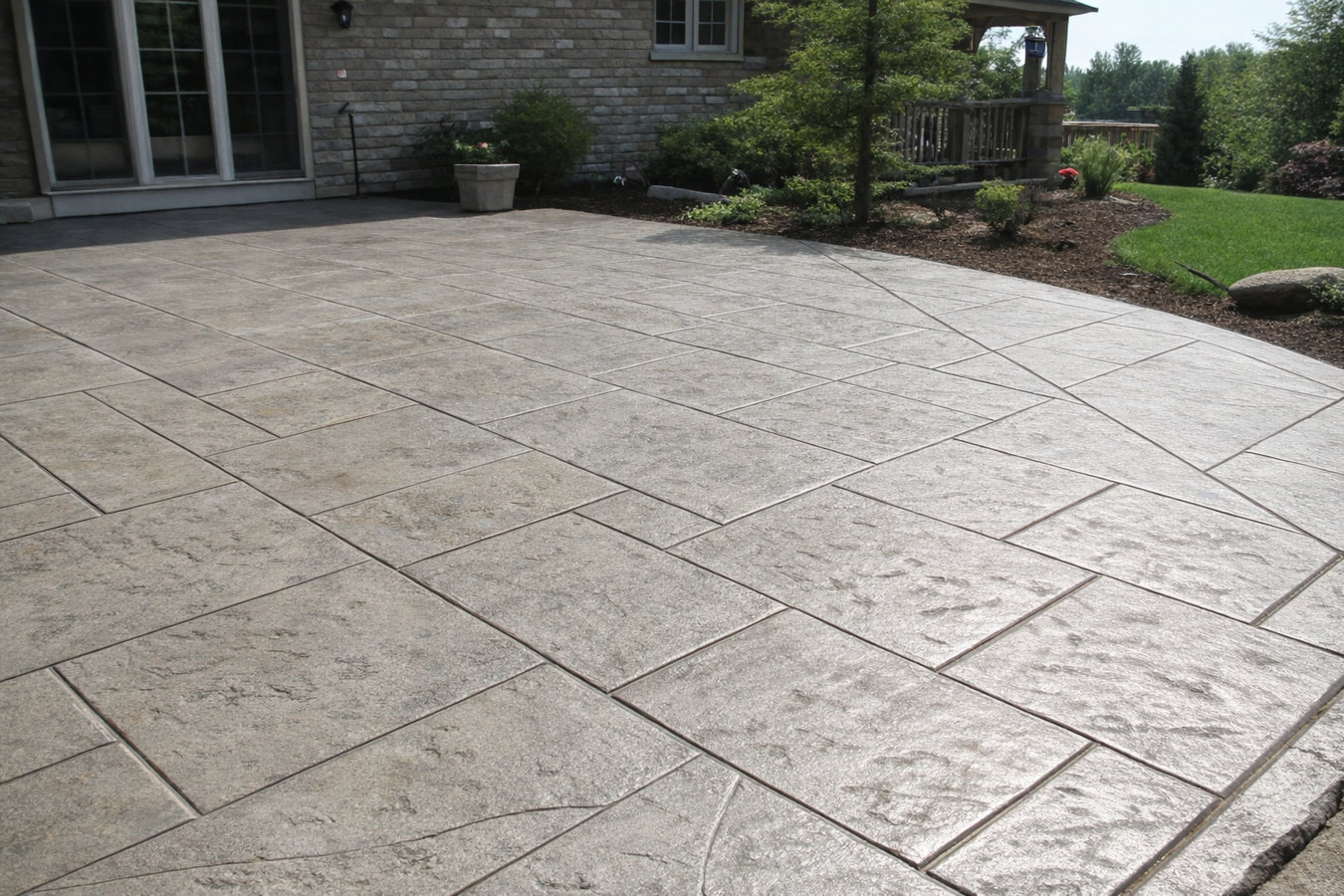
Stamped concrete services in Hartford involve pouring a standard concrete slab and pressing patterned molds into it while it is still soft, producing the appearance of brick, slate, flagstone, or wood at a fraction of the material cost. Most residential projects take one to three days for the pour and stamp, followed by a sealing step a few days later.
Homeowners most often use it for patios, driveways, pool surrounds, and front walkways. It works anywhere a plain concrete slab would go, but with a finished look that matches the style of your home. If you are also considering a more tailored look, our decorative concrete services cover additional finish options beyond stamping.
Hartford homeowners use stamped concrete to upgrade the curb appeal of older homes without a full masonry overhaul, and it is a practical choice for surfaces that see heavy weather year after year.
If sections of your driveway or patio have shifted so that one edge sits higher than another, Hartford's freeze-thaw cycles have likely done their work. Tripping hazards from uneven slabs are a real liability concern. When repair costs approach replacement costs, a new stamped surface is usually the better investment.
If you have updated your landscaping, repainted your exterior, or renovated your front porch but your driveway still looks like it belongs to a different era, stamped concrete is one of the most cost-effective ways to close that gap. A new surface in a complementary color and pattern can change how the whole property reads from the street.
If an existing stamped or colored surface is flaking, fading, or showing white powdery patches, Hartford winters have likely broken down the sealer and the surface beneath. Once flaking starts, it tends to accelerate. A contractor can assess whether resurfacing or full replacement is the more cost-effective path.
If water pools on your concrete rather than running off, the slope is wrong or the surface has settled unevenly. Standing water freezes in place during Hartford winters and expands into the slab with each freeze-thaw cycle. Replacing the surface gives you the chance to correct the drainage grade at the same time.
Our stamped concrete work covers patios, driveways, pool decks, walkways, and front stoops. We handle the full process from demolition of existing surfaces through base preparation, the pour, stamping, coloring, and sealing. Pattern and color selection happens during a pre-project consultation so you can see sample boards and photos of completed work before anything is poured.
For homeowners who want something beyond standard stamping, our concrete sidewalk building service applies the same finish quality to paths, entries, and public-facing walkways. We also offer a full range of decorative options through our decorative concrete services for interior and specialty applications.
Every project includes a sealer coat as part of the job. Skipping the seal is one of the most common reasons stamped concrete fades or flakes within a few seasons in Connecticut's climate, so we treat it as a required step, not an add-on.
Best for homeowners adding or replacing an outdoor living area adjacent to the house.
Suited for replacing cracked or plain concrete driveways with a finished, curb-appeal-boosting surface.
Ideal for homeowners building or renovating a pool area who want a durable, non-slip decorative surround.
A strong choice for front paths and stoops where appearance and long-term durability both matter.
Hartford averages 25 to 30 freeze-thaw cycles per year. Every time water in or under a concrete slab freezes, it expands and pushes against the surface. A stamped slab that was not built with the right base depth, mix design, and sealer will show cracks and surface flaking within a few seasons. This is not a minor inconvenience in Hartford's climate, it is predictable and preventable with the right approach from the start.
Much of Hartford's residential stock, including neighborhoods like the West End, Asylum Hill, and Blue Hills, sits on clay-heavy soils that hold water and shift with temperature changes. Proper base preparation, including compacted gravel to a sufficient depth, is what keeps a stamped surface stable on this type of ground. Skipping or rushing this step is the most common source of premature cracking in the Hartford area.
We regularly work across West Hartford, New Britain, and Southington where soil conditions and housing age create the same challenges. If your home was built before 1960, the base underneath your existing concrete may have settled significantly, and we factor that into the estimate and the prep work. The Portland Cement Association provides detailed guidance on stamped concrete best practices for cold-weather climates.
Reach out by phone or form and we respond within 1 business day to discuss your project. We will ask about the approximate area size, what you are replacing or building, and whether you have photos of the existing space.
We schedule a free on-site visit to measure the area and assess site conditions. During this meeting you will review pattern and color options using sample boards so there are no surprises on pour day.
The crew removes existing concrete if needed, excavates to the correct depth, and compacts a gravel base. This step typically takes one day and is what separates a surface that lasts 20 years from one that cracks in five.
Concrete is poured, stamped, and colored in a single session. After a few days of curing, we apply the sealer. Before leaving, we walk the finished project with you and provide written care instructions including the resealing schedule.
We respond within 1 business day. There is no obligation attached to the estimate. After you submit, someone from our office will call to schedule a free on-site visit to measure your space, discuss your options, and give you a written price breakdown.
(959) 333-3893Connecticut requires all contractors doing this type of work to be registered with the Department of Consumer Protection. Our registration is publicly verifiable online, which means you have a formal channel if anything goes wrong.
We work across Hartford County and beyond, covering 12 service areas from Enfield to New Haven. A local contractor knows Hartford's clay soil, freeze-thaw patterns, and older housing stock in a way that an out-of-area crew does not.
Every stamped concrete project we complete includes the first sealer coat. Skipping sealing is the leading cause of premature fading and surface damage in Connecticut winters. We treat it as part of the job because it is.
You will receive a written itemized quote covering demolition, base preparation, pour, stamping, and sealing before we schedule start dates. If something unexpected comes up during prep, we call you before proceeding.
Hartford Concrete Company has been installing stamped and decorative concrete in the Hartford area since 2023. Every project gets the same attention to base preparation and sealing regardless of size, because the steps you cannot see after the job is done are what determine whether you call us back in three years with a complaint or with another project.
Apply the same finish quality and Hartford-winter durability to paths, entries, and public-facing walkways around your property.
Learn moreExplore finish options beyond stamping, including staining, overlays, and specialty textures for interior slabs and exterior surfaces.
Learn moreContact Hartford Concrete Company today for a free on-site estimate, before Hartford's outdoor construction season fills up.