Loading...
Serving Hartford, CT and surrounding areas. (959) 333-3893
Cracked basement floors, damp slabs, and pitted garage surfaces are fixable. A properly installed concrete floor with the right base prep and vapor barrier solves the moisture and durability problems Hartford homes deal with every winter.
Concrete floor installation in Hartford means removing old material, compacting the base, laying a vapor barrier, pouring a reinforced slab, and finishing the surface — most jobs take three to five days on-site, with a 28-day cure for full strength.
Hartford homes are older than most. A large share were built before 1960, and many have basement floors that were poured thin, without proper reinforcement, and without the moisture protection that is standard today. Decades of freeze-thaw cycles working through clay-heavy soil have taken their toll. If your basement floor is cracked, uneven, or always seems damp, those problems do not go away with patching.
Homeowners who are finishing a basement often add garage floor concrete work at the same time, since the prep and permitting overlap. Those expanding usable space outdoors sometimes pair this with concrete pool decks as a separate phase of their project.
Large cracks running across the floor, sections that have shifted up or down, or areas where the surface is flaking and breaking apart mean the floor has likely reached the end of its useful life. In Hartford's older housing stock, many basement floors were poured thin and without reinforcement, and decades of freeze-thaw movement have taken their toll.
Hartford's clay soils hold water close to the surface. If your basement floor feels damp, shows white powdery deposits, or has visible wet spots after a storm, moisture is working its way up through or around the slab. Persistent moisture damages stored belongings, encourages mold, and weakens the floor over time. A vapor barrier under the new slab addresses this at the source.
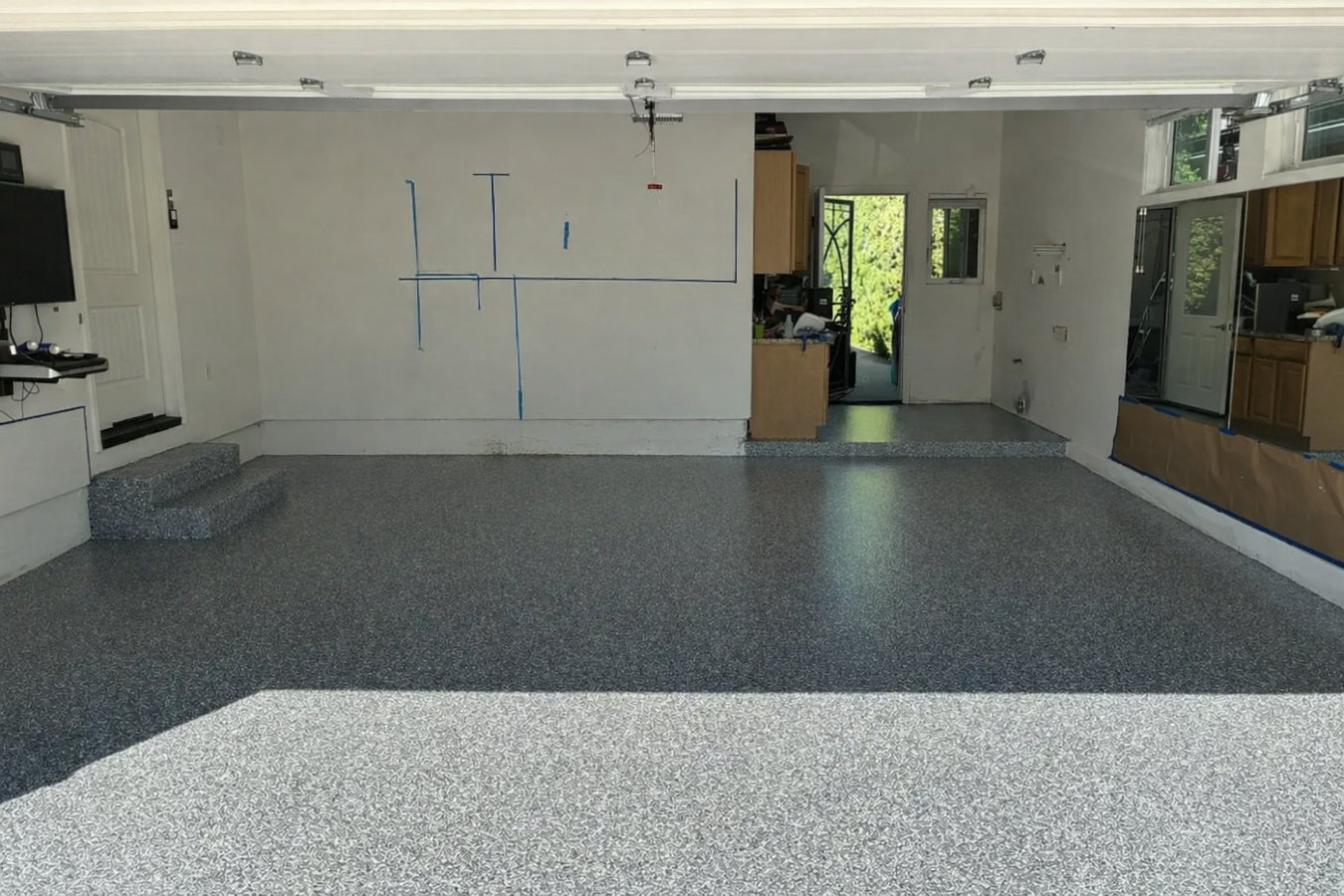
A garage floor that has lost its smooth surface, developed deep pits from road salt, or cracked significantly is harder to clean and a potential trip hazard. Hartford winters mean vehicles bring in a lot of salt and moisture, which accelerates surface deterioration. If patching the same spots repeatedly is routine, replacement is usually more cost-effective.
A persistent musty odor in your basement often points to moisture trapped beneath or within an old slab, which creates conditions where mold and mildew thrive. If cleaning and dehumidifying have not solved the problem, the floor itself may be the source. Replacing the slab and addressing the underlying drainage issue is often the only lasting fix.
We handle full basement floor replacement, new slab installation in unfinished spaces, and garage floor replacement. Every job starts with a site visit where we check the condition of the existing surface, look for signs of moisture, and assess drainage before giving you a written price. We do not quote concrete floor work over the phone because what is under the existing floor affects the scope of every job.
Thickness recommendations depend on how you plan to use the space. A floor designed for foot traffic and storage is poured at a different depth than one that needs to carry vehicle weight. We include reinforcement, whether wire mesh or rebar, in every pour to hold the slab together if cracks do form. Finishing options range from broom texture for garages to troweled smooth or sealed for basement living spaces. For guidance on industry standards, the American Concrete Institute publishes floor installation guidelines that reflect current best practices.
Hartford requires a building permit for concrete floor work in enclosed spaces, and we pull that permit on your behalf. Work done alongside garage floor concrete installation can often be scoped together for efficiency. Homeowners who want a decorative finish on an interior slab can also ask about options that complement concrete pool deck finishes for a consistent look between indoor and outdoor spaces.
Best for Hartford homes with cracked, damp, or aging slabs that are past the point of patching.
Best for unfinished spaces with bare dirt floors or areas that have never had a poured surface.
Best for pitted, salt-damaged, or heavily cracked garage surfaces where repeated repairs are no longer cost-effective.
Hartford averages more than 130 days per year below freezing, and the ground can freeze several inches deep during a typical winter. That repeated freezing and thawing pushes soil up and down, which puts stress on any concrete slab close to grade. For a basement floor in Hartford, base preparation matters enormously. A contractor who skips proper compaction and drainage is setting you up for cracks within a few winters, regardless of how good the pour looks on day one.
Hartford's clay-heavy glacial soils create a specific drainage challenge that does not exist the same way in sandier ground. Clay holds moisture against foundation walls and slabs, which is why so many Hartford basements feel damp or smell musty even when there is no obvious water source. A vapor barrier installed under the new slab is the standard answer, but it only works if the drainage situation below the barrier is also addressed. We assess both during the estimate visit, not after the pour.
We serve homeowners throughout Hartford and the surrounding area, including Enfield, Manchester, and West Hartford. The housing stock and soil conditions across this region vary enough that we never bring a one-size approach to a site visit.
Call or submit the contact form and we respond within 1 business day. We schedule a free site visit to see the space in person and assess drainage before giving you a written price. Phone quotes are not possible for jobs where ground conditions affect the scope.
After the visit you receive a written estimate that breaks out labor, materials, and permit fees separately. We confirm whether a Hartford building permit is required and handle the application, so you are not navigating the city's Building Department on your own.
The crew removes the old floor, compacts the base, installs the vapor barrier and reinforcement, and pours the concrete in a single continuous session. The pour day is the busiest — clear the space completely the day before so the crew has full access.
The floor is off-limits for 24 to 48 hours after the pour. A city inspector will visit to sign off on permitted work, which we coordinate. We do a final walkthrough with you to confirm the surface, check level, and apply any sealer or coating included in the agreement.
Free on-site estimate. Permits handled. Written price before we start — no surprises when the bill comes.
(959) 333-3893We include a vapor barrier under every basement floor we install. Hartford's clay soils hold moisture against slabs in a way that sandier soils do not. Skipping this step is the most common reason Hartford basement floors develop moisture problems within a few years of being poured.
Most Hartford homes were built before 1960, and what we find under an old basement floor is rarely straightforward. We have removed bare dirt, original rubble bases, and decades-old crumbling concrete on jobs across the West End, Blue Hills, and Frog Hollow. We account for that in the estimate, not after work starts.
Hartford requires a permit for enclosed concrete floor work, and we handle the application. Work done without a permit can become a serious problem at resale. Our Connecticut Home Improvement Contractor registration is current, and every job we complete has a clean record with the city.
Hartford's temperature swings during curing are real, especially in spring and fall. We protect pours with insulating blankets in cold weather and schedule jobs outside the temperature extremes that cause surface defects. The Portland Cement Association's cold-weather guidance is the standard we follow when conditions require it.
The problems we see most on replacement jobs — damp floors, random cracking, uneven surfaces — trace back to the same shortcuts taken at installation. Skipping the vapor barrier. Skipping base compaction. Skipping permits. We do not take those shortcuts, and the difference shows up three winters from now when your floor looks the same as it did on day one.
Take the same durable, properly finished concrete surface outside to a pool deck that handles foot traffic and Hartford weather.
Learn moreRestore or replace a pitted, salt-stained garage floor with a properly reinforced slab built for vehicle weight and Connecticut winters.
Learn moreSpring fills our calendar fast. If you are thinking about a basement or garage floor project this year, call now or submit a form — we respond within 1 business day and the estimate is free.