Loading...
Serving Hartford, CT and surrounding areas. (959) 333-3893
A leaning deck, a cracked porch, or a settling addition all trace back to the same problem: footings that were not deep enough or were not built for Hartford's freeze-thaw winters. We dig to the right depth, pull the permit, and have the city inspect the work before a drop of concrete goes in.
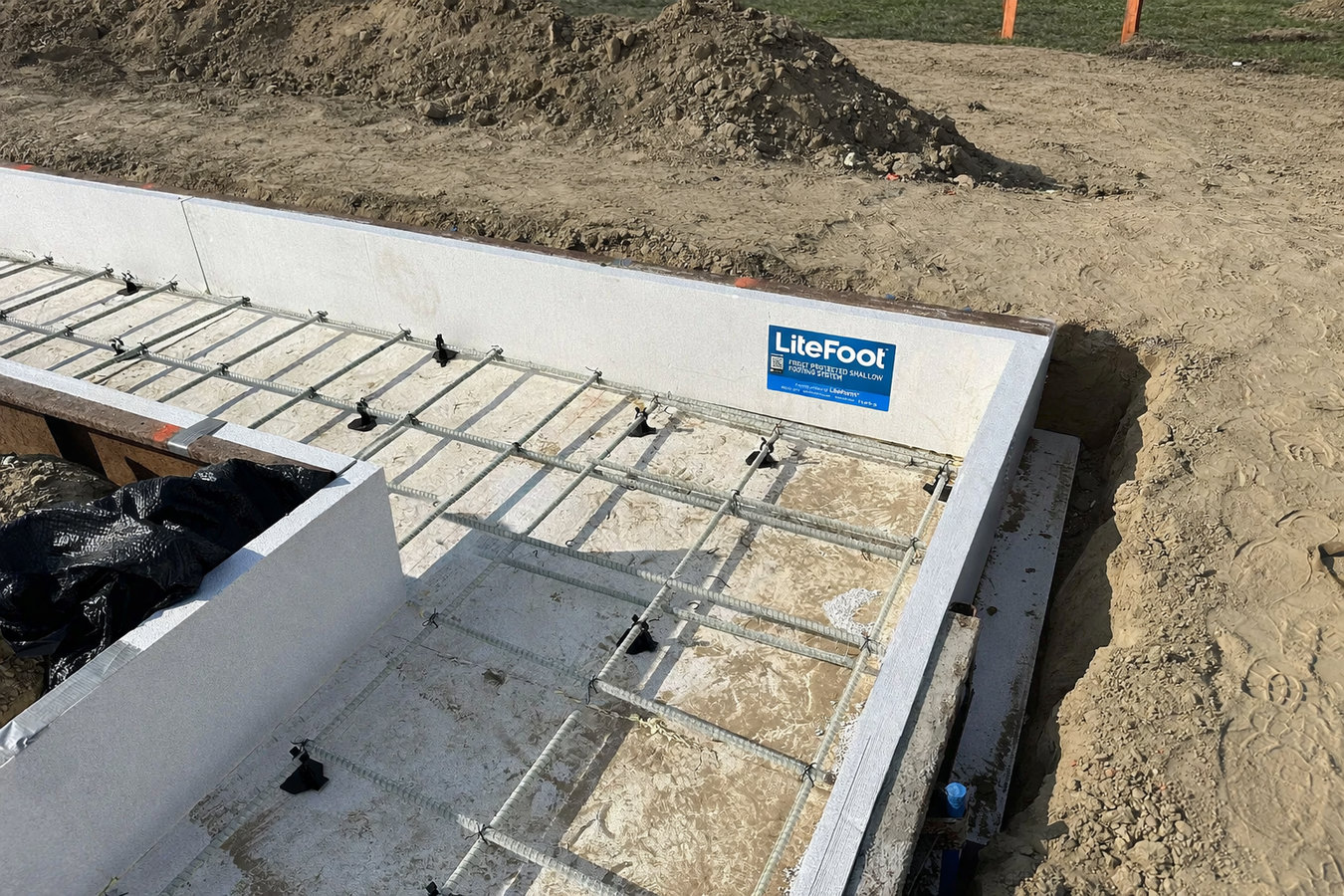
Concrete footings in Hartford are buried concrete pads or continuous trenches that support decks, porches, additions, and foundation walls from below — most residential footing jobs here take one to three days on-site, with a seven-day cure before the next phase of construction can begin, and every footing must reach at least 42 to 48 inches below grade to sit below Hartford's frost line.
The depth requirement is not a formality. When the ground freezes in a Hartford winter, soil expands. A footing that sits in frozen ground gets pushed upward — and whatever structure is attached to it moves too. Hartford has a large share of homes built before 1950, many with original footings that were installed under older, less stringent standards. When those footings finally fail, the signs show up in doors that stick, steps that separate from the house, and cracks that appear in walls above.
If your project also requires a new full foundation — for an addition or new structure — our foundation installation service handles that scope and can be coordinated with footing work on the same site.
If one or more deck posts has started to tilt, or if you can see a gap opening between the deck ledger and your house, the footings below those posts may have shifted. In Hartford, this commonly happens after a hard winter when shallow footings get pushed upward by freezing soil. This is a safety issue, not just cosmetic — a leaning deck can fail under load.
Diagonal or stair-step cracks in brick or block walls, or long cracks in poured concrete, often point to uneven settling in the footings below. Hartford's clay soils expand and contract with moisture changes, and if footings were not sized or placed correctly for that soil, movement is inevitable. Cracks that are widening or accompanied by bowing walls need professional attention quickly.
A gap forming between your front stoop and the main foundation, or a stoop that has dropped noticeably on one side, usually means the footing beneath it has shifted. This is common in Hartford's older neighborhoods, where original stoops were often poured on shallow footings that were not designed to survive decades of freeze-thaw cycles. A separating stoop becomes a tripping hazard and allows water into the gap.
Any new structure attached to or near your home needs properly installed footings before anything else goes up. Hartford's building code requires footings for permitted structures, and using surface-level concrete blocks instead of buried footings will fail inspection. Starting with proper footings is always less expensive than fixing a structure built without them.
Every footing project begins with a free on-site visit. We look at what you are building or repairing, assess the soil conditions, check equipment access, and measure how many footings are needed and how deep they must go. We give you a written estimate covering excavation, materials, labor, and the permit fee — no phone quotes for buried structural work.
We install isolated spread footings for individual deck posts and columns, continuous wall footings for additions and foundation perimeters, and pier footings for detached structures. All footing work is permitted through Hartford's Building Department and includes coordination of the pre-pour inspection — the city inspector checks the excavation before the concrete goes in, which is the verification that protects your investment. For projects that require a full foundation above the footings, our foundation installation service handles that next phase.
Before any digging begins, we call Connecticut 811 to have underground utilities marked — a legal requirement that protects your property and our crew. The Connecticut 811 service requires at least three business days notice before excavation, and we build this into your project schedule automatically.
Best for individual deck posts, column bases, and single-point load supports on new or replacement structures.
Best for additions, foundation perimeters, and structures that carry a distributed load along a line.
Best for detached garages, outbuildings, and any structure that needs deep point support without a full perimeter.
Hartford sits in a climate zone where the ground can freeze to depths of 42 to 48 inches in a hard winter. That means every footing must be dug well below that depth to avoid being pushed out of the ground when soil freezes and expands. For homeowners, this means footing jobs here require more digging and more concrete than the same job in a warmer state — which is a real and legitimate reason why footing costs in Connecticut run higher than national averages. Any contractor quoting below that threshold without explanation is worth questioning.
Much of Hartford's soil is a mix of glacial till and clay — material left behind by the last ice age. Clay holds water, expands when wet, and shrinks when dry, putting ongoing stress on anything buried in it. A good contractor assesses the soil conditions at your specific site before sizing the footings, because clay-heavy ground in one neighborhood may behave differently from sandier soil a few miles away. Hartford's older housing stock compounds this: homes built before 1950 sometimes have original footings that were shallower than current requirements, and a new addition or repair project can surface those problems if the contractor is not paying attention.
We install footings for homeowners throughout the Hartford area, including West Hartford, Enfield, and Southington. Soil conditions and drainage characteristics vary across the region, and we account for those differences before we price any job.
We visit your property within 1 business day of your inquiry. We look at what you are building, assess soil conditions and equipment access, and measure how many footings are needed and how deep they must go before giving you a written estimate.
Once you approve the estimate, we pull the Hartford Building Department permit and call Connecticut 811 at least three business days before digging. Both steps happen before a shovel touches your yard — no shortcuts.
The crew digs to the required depth, sets any rebar, and schedules the city inspector before the concrete goes in. The inspector checks the excavation while it is open — this is the verification that confirms the work was done correctly before it is buried.
Footings reach working strength in about seven days in summer Hartford weather. We backfill around the footings, clean up the site, and tell you exactly when the next phase of your project can begin. Full strength takes about 28 days.
We respond within 1 business day. There is no obligation after the estimate. We will visit your property, assess your soil conditions, and give you a written price before any work begins.
(959) 333-3893Hartford Concrete Company holds a Connecticut Home Improvement Contractor registration and carries general liability and workers compensation insurance. When we are digging around your foundation and utilities, that coverage matters — for you and for us.
We never pour footings without coordinating the required city inspection first. Hartford's Building Department sends an inspector to check the excavation before concrete goes in. That independent verification is your protection — not just our word that the depth is right.
Hartford footings must reach below the frost line — roughly 42 to 48 inches — to avoid being pushed out of the ground in winter. We follow the Connecticut State Building Code standard on every job, not a shortcut that saves time on the day of excavation and causes problems in year two.
Hartford's glacial clay soils expand and contract with moisture, and soil conditions vary from property to property. We evaluate your site before finalizing footing size and depth, because a footing sized for sandy soil is not adequate in heavy clay. This site-specific assessment is what separates long-lasting work from callbacks.
Footings are buried work that you will never see again — which is exactly why getting them right matters more than almost anything else on a structural project. Hartford's climate and soils make that job harder than average, and we built this business around doing the depth and prep work correctly rather than fast.
Lift and level a settled foundation on Hartford's older homes before new footings or additions go in.
Learn moreFull foundation pours for additions and new structures, using the same frost-depth standards as our footing work.
Learn moreSpring scheduling fills fast — contact us now for a free on-site estimate and get your footing project on the calendar before the season books up.