Loading...
Serving Hartford, CT and surrounding areas. (959) 333-3893
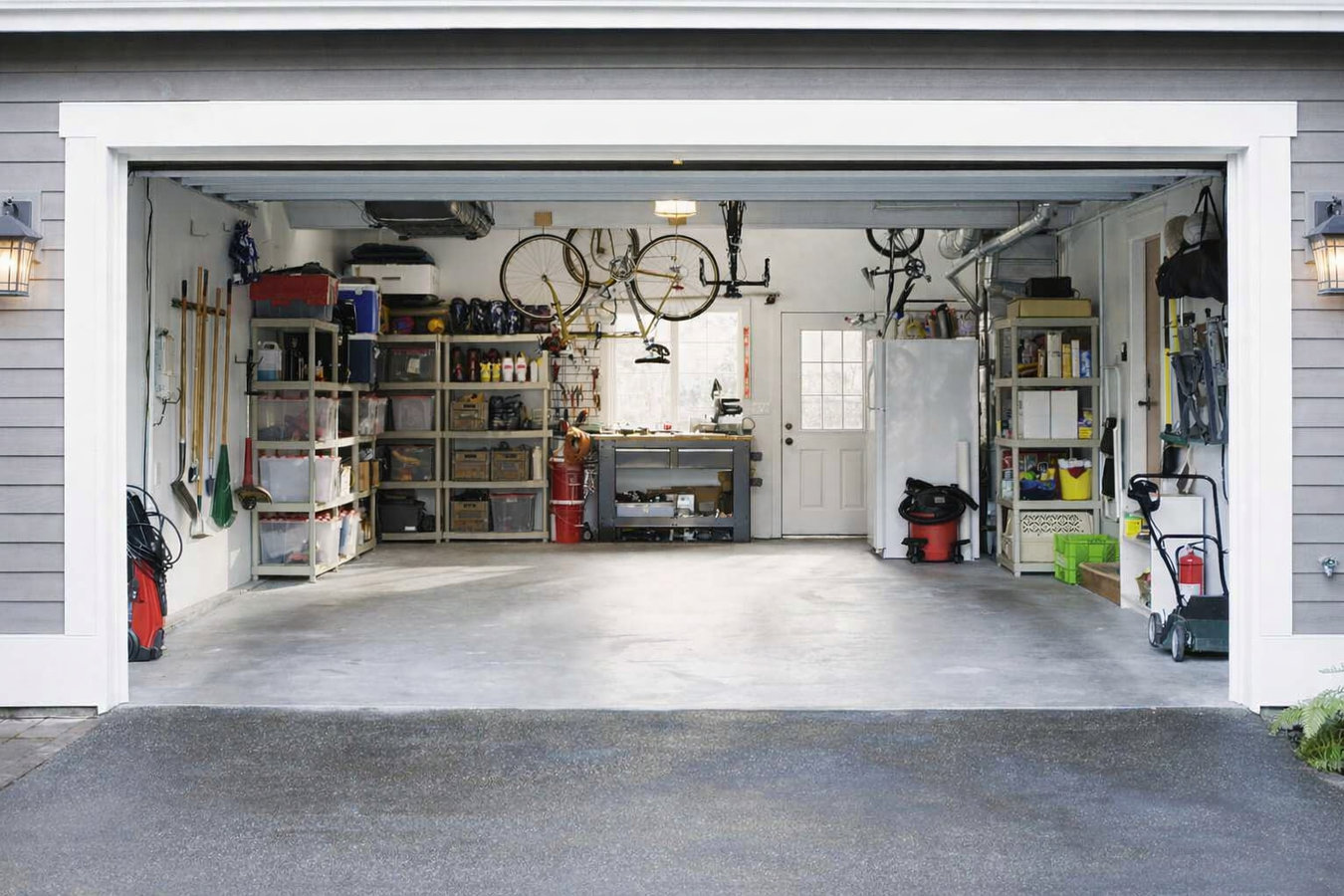
A cracked, spalling, or uneven garage floor only gets worse through Hartford winters. Get a properly poured concrete floor that handles freeze-thaw cycles, heavy vehicles, and decades of use.
Garage floor concrete in Hartford means removing the old slab, compacting the subbase, laying gravel for drainage, and pouring fresh concrete to the right thickness — most jobs take one to two days of active work, with a seven-day wait before you can park a vehicle on the new surface.
Hartford's harsh winters are the main reason garage floors fail early. The city averages more than 130 freeze-thaw cycles per year, and every cycle puts stress on concrete that was not poured on a properly prepared base. Once a floor starts cracking, each winter makes it worse.
Many Hartford homeowners pair their new garage floor with decorative concrete finishes like staining or epoxy coatings applied after the slab has fully cured, giving the space a clean, finished look that is also easier to maintain.
If you can fit a pencil tip into a crack, or if one side sits higher than the other, that is a structural problem, not a cosmetic one. Hartford freeze-thaw cycles push these cracks open wider each winter when the base underneath was not properly prepared. Patching buys a season or two at most.
A correctly poured garage floor slopes slightly toward the door so water runs out. Puddles forming in the middle or back of your garage mean the floor was not sloped right or has settled unevenly. In Hartford's wet springs and heavy winters, standing water accelerates concrete deterioration.
If sweeping kicks up fine gray powder or the surface flakes in thin layers, the top of the concrete is breaking down. In Hartford, this is often caused by road salt tracked in on tires working into the surface through repeated freeze-thaw cycles. Once spalling starts, no sealer will fix a floor that is already deteriorating from within.
Knock on different areas with your knuckle. A solid floor sounds the same everywhere. A hollow thud means the concrete has separated from the base, often because the soil settled or washed away. This is common in older Hartford homes and means those sections are at real risk of sinking under vehicle weight.
Every garage floor job starts with an honest assessment of what is underneath the current slab. In Hartford neighborhoods where homes were built before 1960, the base is often the real problem — soft soil, buried debris, or fill material that was never compacted. We look at it before we quote it.
For a standard replacement, we remove the existing concrete, excavate to the right depth, compact the subbase, lay a gravel drainage layer, and pour new concrete at a minimum of four inches thick for passenger vehicles, or five to six inches where heavy equipment or trucks will be parked. We cut control joints to give the slab a planned place to flex so cracks do not appear randomly across your floor.
After the slab has fully cured, many homeowners in the Hartford area add a concrete floor coating or sealer to protect the surface from oil, salt, and moisture. We can help coordinate that step as well.
Best for floors with base problems, widespread cracking, or severe spalling that patching cannot fix.
For new construction or garage additions where no existing slab is present.
Suited for garages where heavier vehicles or equipment will be stored regularly.
Hartford averages more than 130 freeze-thaw cycles per year — one of the highest rates in the Northeast. Each cycle works on the concrete and the soil beneath it. A floor that was poured correctly handles these cycles for decades. One that was not will show cracks within a few winters. This is why the base preparation matters as much as the pour itself, and why the cheapest bid is rarely the right one.
Hartford's older housing stock adds another layer of complexity. A large share of homes in neighborhoods like Blue Hills, Asylum Hill, and Frog Hollow were built before 1960, often on minimal or uncompacted bases. When we remove an old floor in these neighborhoods, we frequently find soft spots, poor drainage, or buried material. We assess what is there before we give you a price so you are not surprised mid-project.
We serve homeowners across the greater Hartford area, including West Hartford, Manchester, and New Britain. The climate challenges are the same across the region, and so is our approach to addressing them.
For guidance on concrete construction best practices, see the Portland Cement Association and the American Concrete Institute.
We ask about your garage size, whether you have an existing floor to remove, and what you park in there. We respond within 1 business day and schedule a free on-site visit, because the condition of your base changes the price significantly.
We come to your property, look at the current floor, check drainage, and assess the subbase. If we find issues underneath, we walk you through them before you commit to anything. You get a written quote with no vague line items.
You empty the garage completely before we arrive. We remove the old slab, compact the subbase, lay a gravel base, and pour the new concrete. We finish the surface with a slight slope toward the door and cut control joints into the slab.
You can walk on the floor after about 24 hours, but your vehicle stays out for seven full days. Once the floor is ready for use, we do a walkthrough to confirm everything looks right and discuss sealing options for added protection.
We respond within 1 business day. Getting a quote is completely free and carries no obligation. After you submit, someone from our office will call to schedule a free on-site estimate so we can see the space and give you an accurate number.
(959) 333-3893We hold a current Connecticut Home Improvement Contractor registration. You can verify it on the state DCP website in about 30 seconds before you sign anything. That registration gives you real legal recourse if anything ever goes wrong.
We come to your property and look at what is underneath before we give you a price. In Hartford's older neighborhoods, the base is often the real problem, and we factor that into the quote rather than billing you for surprises mid-project.
We use concrete mixes and curing approaches designed for Connecticut's freeze-thaw climate, not a one-size specification from a warmer region. The right mix at the right cure time is what separates a floor that lasts 40 years from one that cracks in five.
We plan projects within the reliable late-April to October window when pours can be done correctly. We will not rush a job in marginal weather to fit more work in, because a floor poured in poor conditions becomes your problem, not ours.
Every decision we make on a garage floor project, from how deep we compact the base to how we protect the concrete while it cures, is made with Hartford's climate in mind. That is what a properly poured floor requires here, and it is the standard we hold ourselves to on every job.
Upgrade your garage floor with a stamped or stained finish that adds character to an otherwise plain surface.
Learn moreInterior concrete floors for basements, workshops, and utility spaces, poured and finished to the same standard.
Learn moreHartford winters are hard on concrete — the sooner you address cracks or a failing base, the less the repair costs. Call now or request a free estimate online.