Loading...
Serving Hartford, CT and surrounding areas. (959) 333-3893
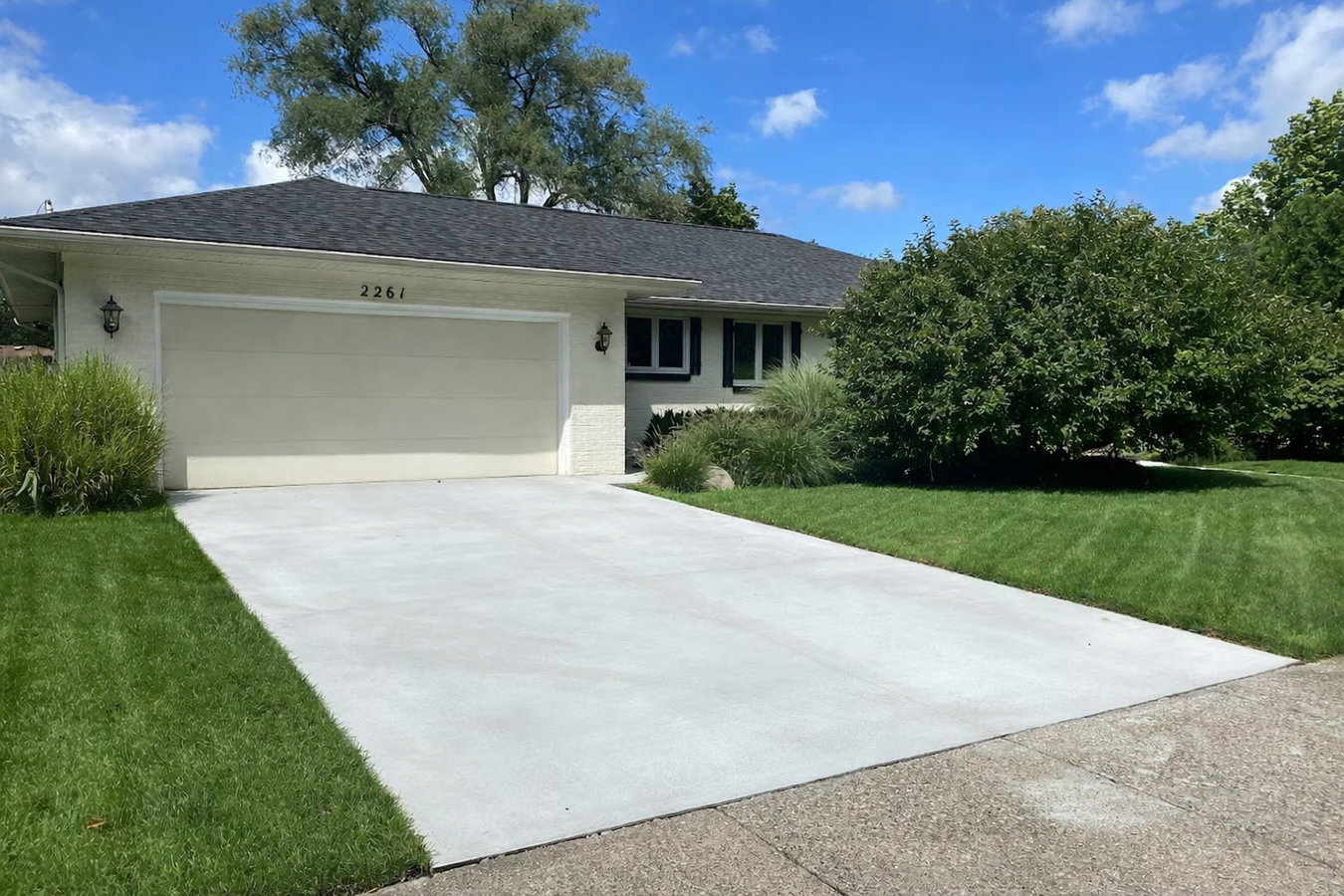
Your driveway is the first thing people see. A properly built concrete driveway handles Hartford winters, heavy vehicles, and decades of use without cracking or sinking — and we handle permits, prep, and pour from start to finish.
Concrete driveway building in Hartford means removing the old surface, grading for drainage, compacting a gravel base, and pouring a properly reinforced slab - most jobs take two to three days on-site, with a seven-day cure before you can drive on it.
Hartford homes are older than most, and what is underneath your current driveway matters as much as the concrete itself. Clay-heavy soil around the Connecticut River valley holds moisture and shifts with the seasons, which means base preparation here requires more care than a contractor working in a drier climate might apply. A crew that skips depth or drainage is setting you up for cracks within a few winters.
If you are also thinking about the walkway from the driveway to your door, our concrete sidewalk building service is a natural complement and is often scoped into the same project for efficiency.
Chunks of the surface coming off in spring, especially near edges or where you apply ice melt, mean the concrete has been damaged by Hartford's freeze-thaw cycles. Widespread flaking cannot be reversed with patching. Once the surface starts going, water gets in faster and damage accelerates each winter.
A few straight, narrow cracks along the joints are normal. Diagonal cracks or a spiderweb pattern mean the base has shifted or settled unevenly. In Hartford's older neighborhoods, this often happens when original fill compacts over time or when tree roots from mature street trees push up from below.
A properly built driveway is graded so water flows toward the street or a drain. Standing water after rain means the surface has settled unevenly or was never graded correctly. That pooling water freezes in winter and speeds up cracking from below.
Concrete that old has likely been through hundreds of freeze-thaw cycles, often without proper sealing. A driveway that looks passable in summer may be one hard winter away from significant failure. Look for a stamped date near the edge if you are unsure of the age.
Every concrete driveway project starts with an on-site visit. We measure your space, check the existing surface and drainage, and give you a written estimate that breaks down labor, materials, and permit fees separately. No phone quotes for projects where the ground condition affects the price.
We handle full driveway replacement from demo to final finish, new construction on lots that have never had a paved surface, and driveway expansions or additions for added parking. For homeowners who want more than a plain gray surface, decorative finishes including broomed texture, exposed aggregate, and color are available. If your project includes a front walkway or a path to a side entrance, we can tie in concrete patio construction on the same site visit to keep everything coordinated.
Hartford requires a building permit for new driveway construction, and projects that connect to a city street often need a separate driveway opening permit through the Department of Public Works. We handle both — you do not need to visit city hall or coordinate inspections. For a deeper look at permitting requirements, the City of Hartford Building Department publishes its requirements online.
Best for driveways with widespread cracking, surface flaking, or drainage problems.
Best for properties that currently have gravel, asphalt, or no paved surface.
Best for adding a second parking lane, widening an existing apron, or extending toward a garage.
Hartford averages more than 40 inches of snow per year, and temperatures cross the freezing point multiple times in a single week throughout late fall and winter. That repeated freeze-thaw cycle is the single biggest threat to a concrete surface in this area. Contractors who do not account for it in their base prep, mix selection, and joint placement are building a concrete driveway that will show problems within two or three seasons.
A large share of Hartford homes, particularly in neighborhoods like the West End, Blue Hills, and Asylum Hill, were built before 1960. When we remove an old surface, we sometimes find unstable fill, buried debris, or drainage problems that were not visible from the street. That is why we always include an on-site visit before quoting - a contractor who gives you a number without seeing your property cannot account for what is underneath. Any reputable concrete pad contractor works the same way.
We regularly serve homeowners in West Hartford, New Britain, and throughout the surrounding towns. The soil conditions and housing ages vary across the region, and we adjust our approach accordingly.
Call or submit a form and we respond within 1 business day. We schedule a free on-site visit to measure your space and check drainage — no phone quotes for jobs where ground conditions affect the price.
We handle Hartford building permits and, if needed, the city street opening permit. This usually takes one to three weeks. We build this into your timeline so there are no delays or surprises.
The crew removes your existing surface, compacts the ground, and installs the gravel base layer. This is the loudest day — expect equipment noise and a dumpster out front.
We pour and finish the concrete, cut control joints, and rope off the area. Keep vehicles off for at least seven days. We will tell you exactly when to apply your first sealer.
We respond within 1 business day. There is no obligation to proceed after the estimate. Once you submit, someone from our office will call to schedule a free on-site visit — we measure your space, check drainage, and give you a written breakdown before any work begins.
(959) 333-3893Hartford Concrete Company holds a Connecticut Home Improvement Contractor registration and carries full general liability and workers compensation insurance. You are protected if anything goes wrong on your property.
We pull your building permit and, when needed, the separate street opening permit through Hartford DPW. You never need to visit city hall. Unpermitted driveway work is a real liability when you sell.
Every driveway we build uses cold-climate concrete mix, properly spaced control joints, and a compacted gravel base deep enough for Hartford's clay-heavy soil. This is the work that prevents callbacks in year two or three.
We get back to every inquiry within 1 business day. The estimate includes a written line-item breakdown so you know exactly what you are paying for — no single-number quotes for multi-thousand dollar projects.
Hartford's housing stock is older than most Connecticut cities, and the soil conditions here demand more care than a generic approach provides. We built this business around doing that prep work correctly the first time — so you are not calling us back or calling someone else in two years.
Extend your outdoor living space with a concrete patio built for Hartford's climate and your backyard layout.
Learn moreA properly graded concrete sidewalk connects your driveway to your entrance and handles Hartford's freeze-thaw cycles.
Learn moreContact us today for a free on-site estimate — most Hartford projects can be scheduled within two to four weeks of permit approval.