Loading...
Serving Hartford, CT and surrounding areas. (959) 333-3893
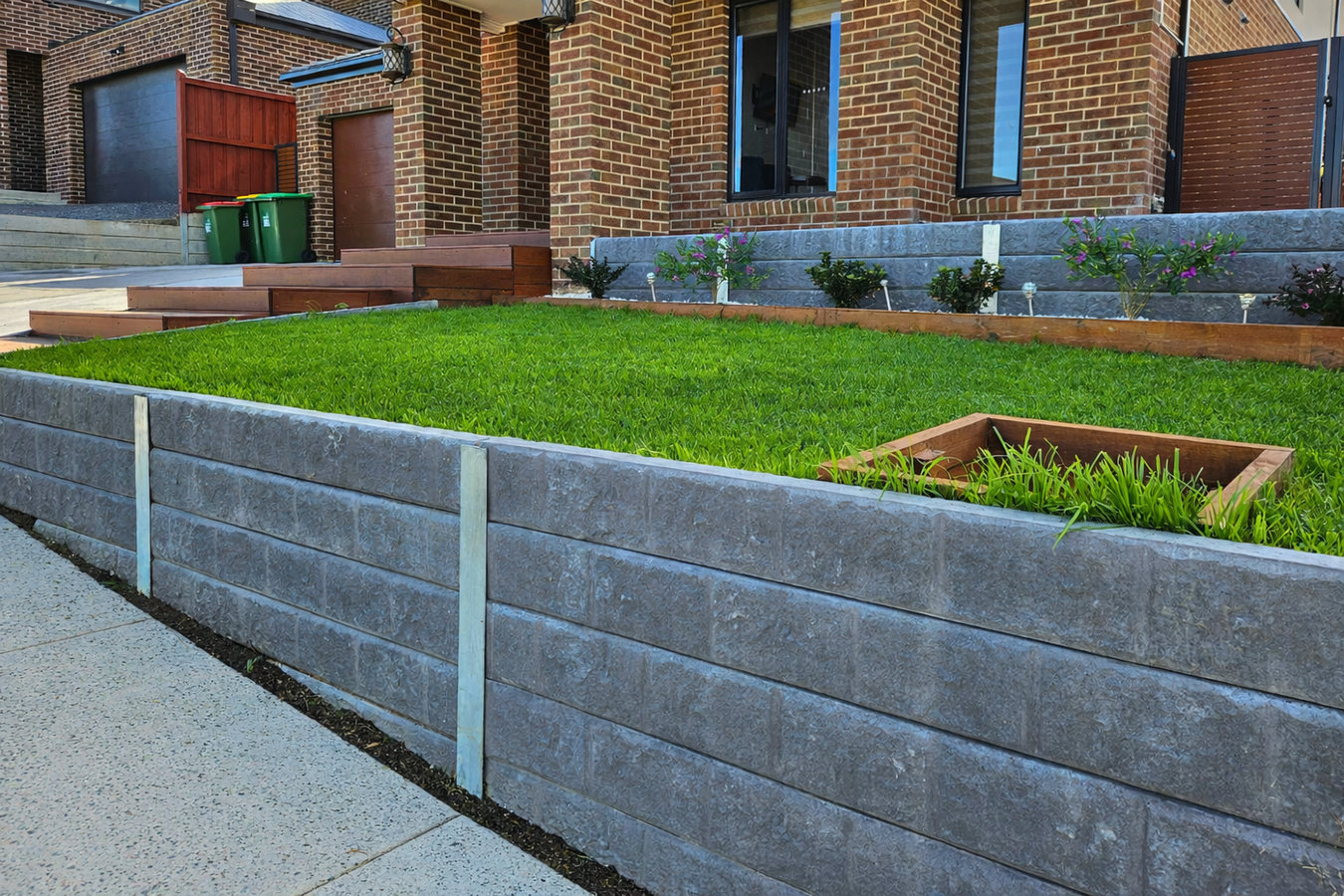
Hartford slopes, clay soils, and hard winters push old walls past their limit. A properly built concrete retaining wall stops erosion, reclaims your yard, and holds its ground through decades of freeze-thaw cycles.
Concrete retaining walls in Hartford hold back soil on slopes and hillsides so it does not slide, erode, or wash away - most residential jobs take two to five days on-site from excavation to backfill, with drainage designed in from the start.
If you have a yard that slopes, a driveway that keeps collecting soil from the uphill side, or an old wall that is starting to lean, a properly built concrete retaining wall changes all of that. Concrete retaining walls in Hartford are not just about holding dirt. In a city where the soil is clay-heavy and the winters push the ground through more than 130 freeze-thaw cycles per year, the drainage system behind the wall matters as much as the wall itself.
Homeowners who are also regrading their outdoor space sometimes combine this work with concrete floor installation below grade, or add concrete steps construction to connect grade changes cleanly. Both are common add-ons when a slope is being addressed.
Stand at one end of your wall and look down its length. If the face curves outward or tilts away from the slope, the wall is losing the battle against soil pressure. In Hartford's clay-heavy soil, this kind of movement often accelerates once it starts. A wall that leans a little in spring can lean a lot more by fall.
If you notice soil, mulch, or gravel migrating downhill onto paved surfaces after a rainstorm, your slope is eroding. Hartford's spring rains are heavy enough to move significant amounts of soil, and without a wall to hold it back, that erosion gets worse each year and can eventually undermine your driveway or home foundation.
Small surface cracks are often harmless, but horizontal cracks running parallel to the ground are a warning sign. They indicate the wall is being pushed from behind. In Hartford's freeze-thaw climate, this often means water has been building up behind the wall and expanding when it freezes. Evaluate these before the next winter.
Standing water collecting at the bottom of a slope close to your house after rain or snowmelt is looking for somewhere to go, and your foundation is a likely destination. A retaining wall with proper drainage redirects that water away from the structure. This is especially worth addressing in Hartford's older neighborhoods, where foundation drainage may be original to the house.
We handle new wall construction from scratch, full replacement of failing walls, and extensions that add height or length to an existing structure. Every project starts with an on-site visit to assess the slope, the soil, and the drainage situation before we give you a price. We do not quote retaining wall jobs over the phone.
The drainage system is not optional on any wall we build. Gravel backfill, properly sized drainage outlets, and correct grading are included in every job because Hartford's clay soils demand it. Walls without drainage fail faster than the concrete itself weathers. The American Society of Concrete Contractors publishes guidance on drainage best practices that we follow on every project.
For walls that reach the height threshold requiring a Hartford building permit, we pull the permit on your behalf and coordinate with the city inspector. Homeowners adding steps to access different yard levels can bundle concrete steps construction into the same project, and those finishing a basement or lower-level space often pair this with concrete floor installation below grade.
Best for slopes that have never had a wall, or yards where erosion has been ongoing without a permanent fix.
Best for leaning, cracking, or drainage-deficient walls that have reached the end of their useful life.
Best for adding height to an undersized wall or extending coverage to an adjacent slope section.
Most of Hartford sits on glacially deposited soils with significant clay content. Clay holds water rather than draining it, which means the soil behind a retaining wall stays saturated longer after rain than it would in sandier ground. When that saturated soil freezes in winter, it expands and pushes against the wall face. Hartford averages more than 130 freeze-thaw cycles per year, meaning this cycle repeats all winter long. Walls built without accounting for it will show movement or cracking within a few years.
Hartford's residential neighborhoods contain a high share of homes built before 1960, many with original retaining walls that are now 60 to 80 years old. Walls in the West End, Blue Hills, and Asylum Hill were often built without modern drainage standards and are reaching the end of their useful life. If your home was built before 1970 and has a retaining wall, it is worth having it evaluated even if it has not failed yet. Spring, after snowmelt, is when problems become most visible, and it is also when every contractor in the area is booked out.
We serve homeowners throughout the Hartford area, including West Hartford, Bristol, and New Britain. Soil conditions and slope grades vary across the region, and we adjust drainage design accordingly on each site visit.
Reach out by phone or the contact form and we respond within 1 business day. We schedule a free on-site visit because slope angle, soil conditions, and drainage patterns cannot be assessed from a photo.
After the visit you receive a written estimate that breaks out labor, materials, and any permit costs. For walls that require a Hartford building permit, we handle the application and add the permit timeline to your schedule.
The crew digs out the base area, compacts the ground, and builds the wall from the bottom up. Expect a mini excavator in your yard and piles of displaced soil for one to two days. This is the noisiest part of the project.
Once the wall is in place, the crew installs drainage material, backfills the soil, and grades the area so water flows away from the wall. Before leaving, we walk the finished work with you and cover any maintenance questions in writing.
Free on-site estimate. We handle permits. No pressure, no phone quotes - just a written number you can compare.
(959) 333-3893We include gravel backfill and drainage outlets in every retaining wall we build. Hartford's clay soils make this non-negotiable. Skipping drainage is the single most common reason walls fail within a few winters of installation.
Hartford averages more than 130 freeze-thaw cycles per year. We select concrete mixes and drainage designs specifically for this climate. A wall built without that consideration looks fine in summer and starts moving by the second winter.
We handle Hartford building permit applications on your behalf. Unpermitted retaining walls create real problems at resale and can result in required removal at your cost. Every wall we build has a clean record. Connecticut Home Improvement Contractor registration is maintained and current.
We arrange underground utility line marking through Connecticut's free 811 service before any excavation begins. This is required by state law and protects both your property and the crew. The Connecticut 811 service is the standard for any responsible contractor working in this state.
Every one of these points connects to a specific problem we see on replacement jobs: walls built without drainage, walls built without permits, and walls built without accounting for Hartford winters. We build them right the first time so you are not calling us, or anyone else, to redo the work in five years.
Replace a failing basement or garage floor with a properly reinforced slab built for Hartford's clay soils and temperature swings.
Learn moreAdd safe, durable concrete steps that connect grade changes in your yard or tie into a new retaining wall layout.
Learn moreSpring is peak season for wall failures and contractor bookings. Call now to get on the schedule before the rush - or submit a form and we will respond within 1 business day.