Loading...
Serving Hartford, CT and surrounding areas. (959) 333-3893
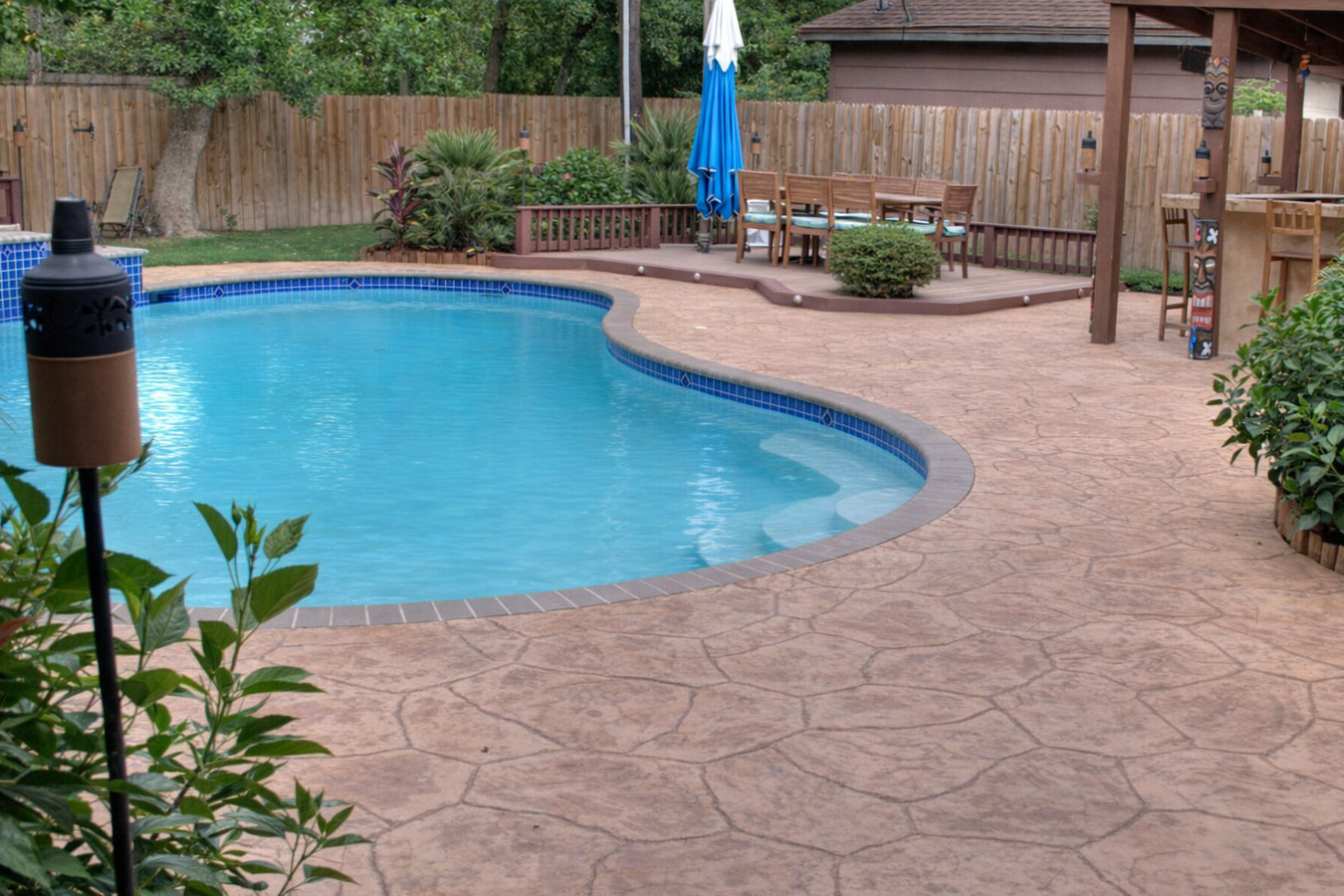
Your pool deck takes more daily abuse than almost any other surface on your property. We build and resurface concrete pool decks in Hartford designed to drain properly, grip underfoot when wet, and hold up through Connecticut winters - not just look good on installation day.
Concrete pool decks in Hartford are graded for drainage, poured with a freeze-thaw resistant mix, and finished with a slip-resistant texture - most new deck projects take three to five days on-site, with a week of curing before the area is open for use.
A pool deck in Hartford faces two threats that do not apply in warmer states: the repeated freeze-thaw cycle that forces open any surface crack each winter, and the clay-heavy soil underneath that shifts with moisture changes over the decades. Getting the base preparation, the concrete mix, and the drainage slope right at installation is what separates a deck that lasts 30 years from one that needs repairs after three winters.
If your backyard project also includes steps from the deck down to the yard or up to a door, our concrete steps construction service is often scoped into the same project to keep the work coordinated and the finish consistent.
If a crack you noticed last fall is noticeably wider or longer now that spring has arrived, Hartford's freeze-thaw cycle has been at work. Water entered the crack, froze, and forced it open further. This process repeats every winter, so a crack that seems minor now will not stay that way without intervention.
Walk your deck after a heavy rain and watch where the water goes. If it sits in low spots rather than draining away from the pool edge, the slope has either settled or was never graded correctly. Standing water accelerates surface deterioration and creates a slip hazard, two problems that compound each other quickly.
If the top layer of your concrete is peeling away in thin chips, or if the surface feels rough and pitted where it once was smooth, the concrete is spalling. In Hartford, this is often caused by years of freeze-thaw stress combined with pool chemical exposure. It will not heal on its own and will worsen each winter without treatment.
Many Hartford-area pools were installed in the 1970s and 1980s, and their decks have never had a sealer applied. Unsealed concrete in this climate absorbs water, which accelerates cracking and surface breakdown. If you do not know when yours was last sealed, that is a strong signal it is time for a professional assessment.
Every pool deck project starts with an on-site visit to measure the area, assess any existing concrete, and check the drainage slope. We give you a written estimate that breaks out labor, materials, and permit costs separately. We do not quote pool deck jobs by phone because the condition of the existing base directly affects the price.
We handle full deck replacement when the existing slab is structurally compromised, new deck installation for pools that have never had a finished surround, and resurfacing for decks where the base is still sound but the surface needs renewal. For homeowners who want a decorative finish, we offer stamped concrete patterns, exposed aggregate, and color treatments. If your project extends to a connecting patio area, we can coordinate concrete patio construction on the same schedule.
Hartford requires building permits for new pool deck construction. We pull the permit before any work begins and coordinate the city inspection at completion. For details on Hartford's permit requirements, the City of Hartford Building Department lists current requirements online.
Best for decks with structural cracks, heaved sections, or compromised bases that resurfacing cannot fix.
Best for decks where the base is sound but the surface is flaking, discolored, or worn.
Best for pools that currently have bare soil or an aging surround that has never been properly finished.
Connecticut's outdoor pool season runs roughly from Memorial Day to Labor Day, about 14 weeks. That short window means most Hartford homeowners want their deck done by late May, which creates a spring rush for concrete contractors. If you are planning a new deck or a resurface, reaching out in February or March gives you the best shot at getting on a schedule before the busy season fills up.
A significant portion of Hartford-area homes with in-ground pools were built in the 1960s through 1980s. Decks from that era were often poured without the drainage slopes or joint spacing that modern contractors use, and they have been through 40-plus winters. Hartford's clay-heavy glacial soil also expands and contracts with moisture, which puts stress on slabs that were not designed with that movement in mind. We account for both the soil conditions and the age of the existing structure before recommending any course of action.
We serve pool deck customers throughout Hartford and in surrounding communities including West Hartford, Middletown, and Manchester. The soil profile and housing ages shift across the region, and we adjust our base preparation approach accordingly.
We respond within 1 business day and schedule a free on-site visit. We will ask the size of your pool area, whether you want new construction or a resurface, and what finish you have in mind - but you do not need firm answers before we visit.
We measure the area, assess the drainage slope, and check for frost damage or soil movement in the existing concrete. You get a written estimate that breaks down cost by category - no pressure to sign on the spot.
For new deck construction, we apply for Hartford's required building permit before any work begins. This typically adds one to two weeks to the timeline. Once the permit is in hand, you get a confirmed start date.
The crew preps the base, pours and finishes the concrete with your chosen texture, then ropes off the area for at least five to seven days of curing. At completion, a sealer is applied and the city inspector signs off if a permit was pulled.
Free on-site estimate. No obligation. We handle Hartford permits and schedule the city inspection for you.
(959) 333-3893We are registered with the Connecticut Department of Consumer Protection as a home improvement contractor. That registration means you have a formal avenue for recourse if anything goes wrong - and it is a baseline requirement that some contractors skip.
We have worked on pool decks throughout Hartford's neighborhoods, from the 1970s-era pools in Blue Hills to newer installations in the West End. That local track record means we know what Hartford's soil and winters do to a deck over time.
We slope every deck surface at approximately a quarter inch of drop per foot of distance away from the pool edge, so water drains toward the yard rather than back into the pool or under the slab. Poor drainage is the leading cause of early deck failure in Hartford's climate.
The American Concrete Institute recommends resealing pool deck surfaces every two to three years in freeze-thaw climates. We walk you through exactly what to apply and when, so you are not left guessing how to protect your investment after we leave.
Connecticut's contractor registration requirements and Hartford's permit process exist to protect homeowners, and we treat both as standard practice, not optional extras. When you hire us, you get documentation that the work was done correctly - which matters at resale and matters if something ever needs warranty attention. For a deeper look at what proper pool deck construction involves, the American Concrete Institute publishes standards used by contractors across the industry.
Add or replace concrete steps connecting your pool deck to a patio, back door, or yard - built to Hartford's freeze-thaw standards.
Learn moreExtend your outdoor living area with a concrete patio that ties into your pool deck for a unified, low-maintenance backyard surface.
Learn moreSpring contractor schedules fill fast - call now to lock in your start date and have your deck done before the season begins.